
Create Memories in Chania
Old Town of Chania
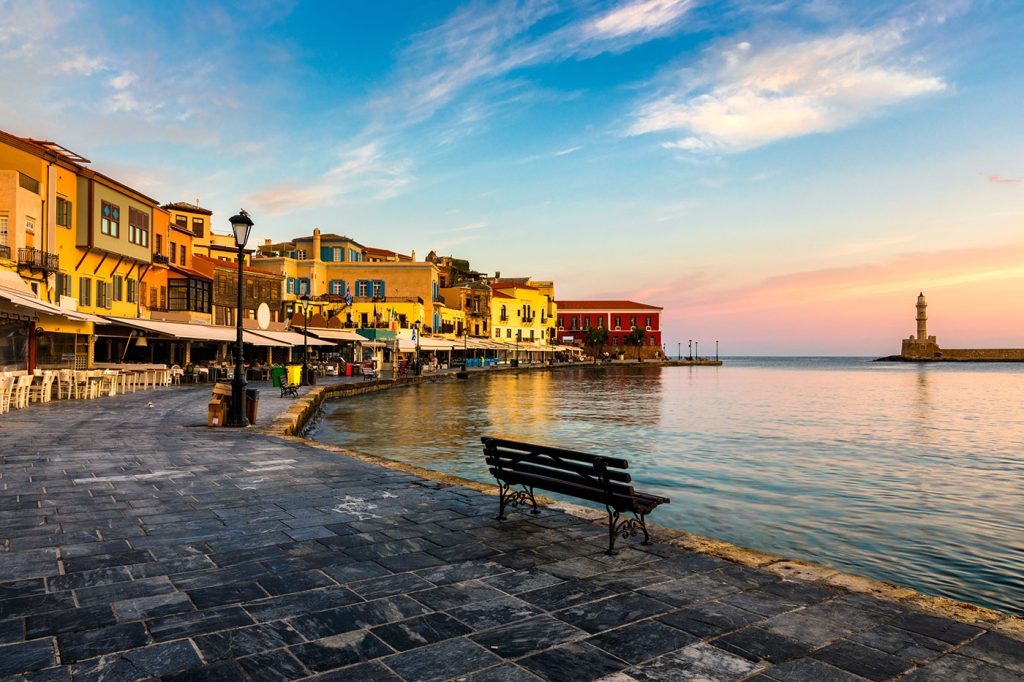
In the neighborhood known as Tabakaria, located within the old district of Halepa, you’ll find one of the most picturesque restaurants in Chania—right on the beach. “Thalassino Ageri” (Sea Breeze) is a well-kept secret among gourmet lovers, perfect for a romantic dinner accompanied by the soothing sound of the waves below.
The breathtaking sea view and authentic Mediterranean cuisine will delight even the most discerning palates. Fresh fish, perfectly grilled octopus and calamari, lobster with pasta, whitebait, unique sea urchin salad, fresh bread, and salads—all served amidst the salty sea breeze—create the special touches that make dining here one of the best culinary experiences in Chania.
The Tabakaria area, where “Thalassino Ageri” is located, impresses visitors with its abandoned yet strikingly beautiful buildings and industrial archaeological monuments. This historic architectural backdrop sets a cinematic scene, making your seaside meal at “Thalassino Ageri” an unforgettable experience.
Venetian Shipyards
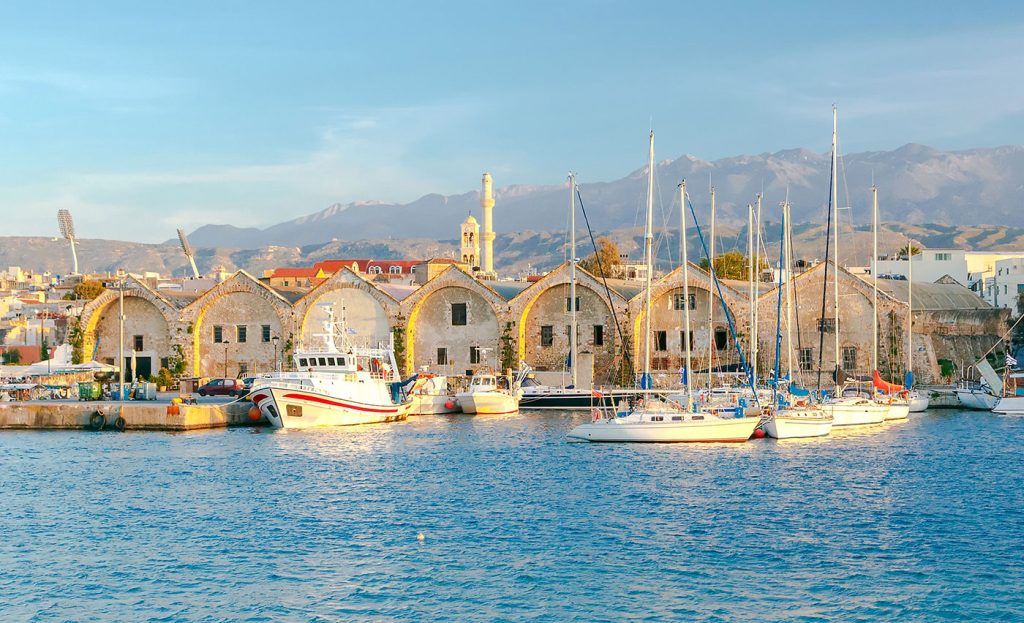
During the golden era when the Venetian fleet dominated the Mediterranean Sea, the Venetian shipyards—also known as Arsenalia—were built. Their purpose was to supply, repair, and even construct new fleets and ships.
The first two shipyards were completed in the early 16th century. Each measures approximately 50 meters in length, 10 meters in height, and 9 meters in width.
During the Ottoman period, they served as military warehouses. Unfortunately, following the end of Ottoman rule and after numerous bombings and demolitions, only 9 out of the original 23 shipyards remain intact today.
The shipyards, especially the large Arsenale, have also been used as a school, hospital, theater, and city hall throughout their history. Today, they serve as venues for major exhibitions and conferences.
Venizelos Graves
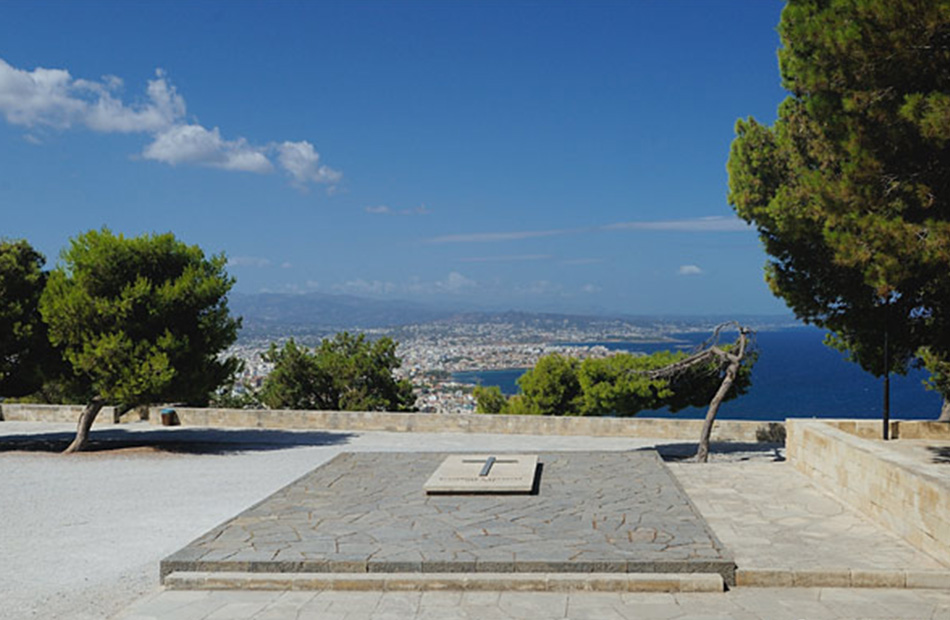
Located in the eastern part of the Chania Peninsula, just a 5-minute drive from Halepa Guest House, lie the tombs of Eleftherios Venizelos and his son Sophocles. Surrounding the tombs is a beautiful park shaded by pine trees, featuring gardens, paved walkways, stairs, terraces, and stunning views over the city of Chania.
Facing each other are the tombs of Eleftherios Venizelos and Sophocles Venizelos. Notably, the tomb of Eleftherios Venizelos is inscribed with iron letters quoting his famous speech delivered in the Greek Parliament in April 1932.
Also nearby is the Statue of Liberty by Spyros Kayaledakis. On February 9, 1897, during the Akrotiri Revolt, Kayaledakis famously raised the Greek flag by using his own body as a flagpole in defiance of the Great Powers. The statue honors this heroic act and symbolizes the Cretan struggle for freedom.
Additionally, the Monastery of Prophet Elias, a historic sacred site dating back to the 16th century, stands in the area. Although damaged by looting, it remains a place of great historical significance.
Thodorou Islet
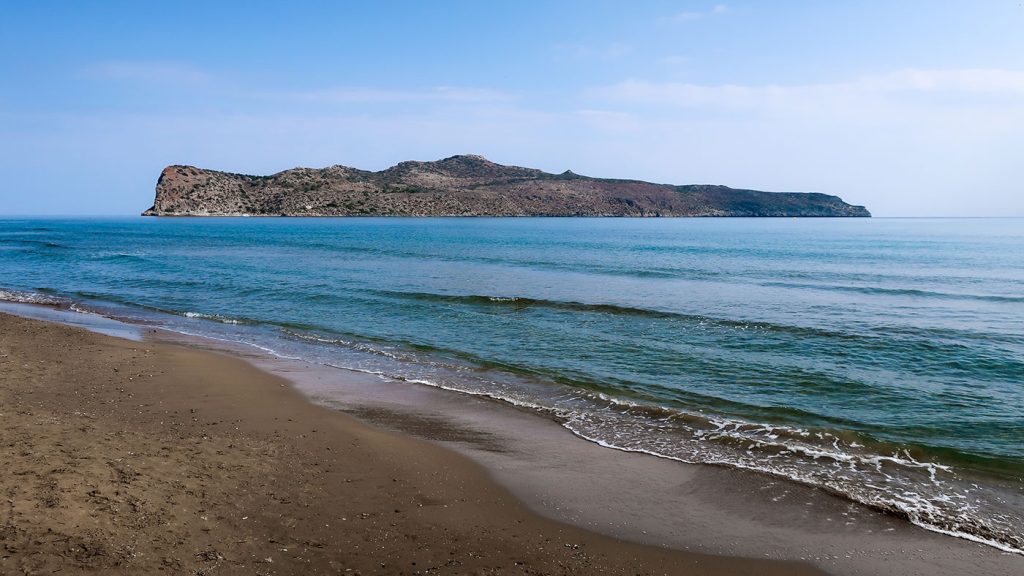
Gazing out over the endless blue from Agia Marina and Platanias in Chania, your view is interrupted by a small island roughly in the middle of the bay—the island of the Saints Theodore, locally known simply as “Thodorou.”
Tracing back to the Minoan period, Thodorou was considered a sacred sanctuary. During Venetian rule, the Venetians built two forts on the islet to prevent pirates and Ottoman forces from invading Chania via Platanias. The larger fortress was named “Turlouro,” while the smaller one was called “San Theodoro.” Fierce battles against the Turks were fought around Thodorou, but today these forts stand as ruins.
The island’s only inhabitants are the Cretan wild goats, known as kri-kri, a species endangered in the wild. They were relocated here in an effort to protect and breed them away from dangers found in inhabited areas. Because of this, Thodorou has been declared a protected area, and all human activity on the island is prohibited.
Currently, about 80 kri-kri goats live on Thodorou, and since 2009, limited short visits are allowed for tourists under strict regulations.
Chania Lighthouse
Traveling back to the Venetian and Ottoman eras, it becomes clear that the city of Chania had a thriving trade and maritime industry. Due to its strategic location and prevailing weather conditions, there was a need to build the Venetian harbor.
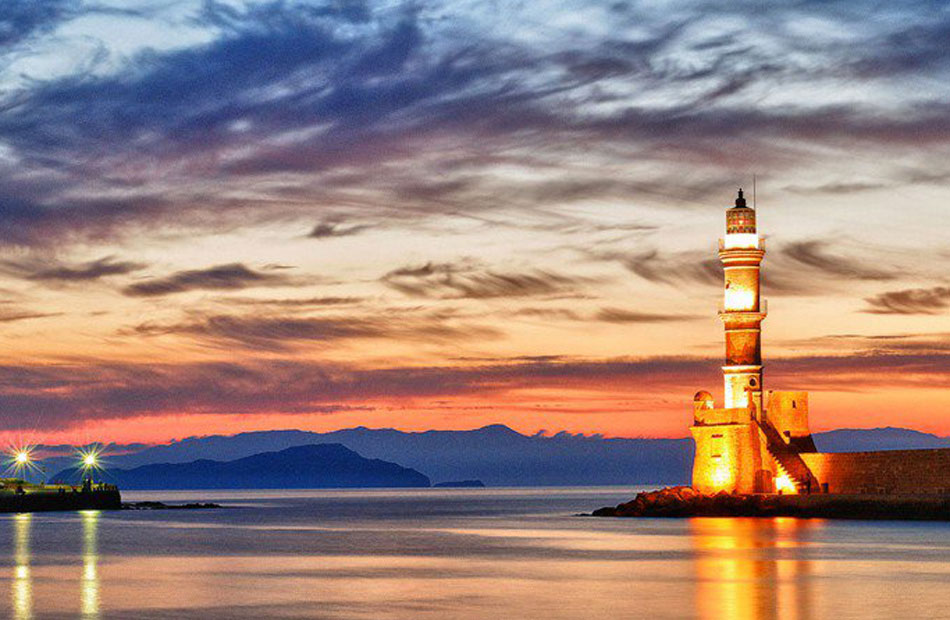
The Venetian Lighthouse of Chania was constructed on the natural rock of the harbor breakwater. Originally, it operated as an open flame beacon. Its architectural features reflect Cretan traditions shaped from the late Venetian period onward. The lighthouse took on the form we see today by the end of Venetian rule.
Its exterior and interior resemble a minaret, with a spiral staircase leading up to the balcony and the glass lantern room. For this reason, experts find it difficult to classify the lighthouse within standard lighthouse architectural categories, as it lacks a keeper’s residence, given its location within a populated area.
The lighthouse stands 21 meters tall, and its light can be seen up to 7 miles away. It is a cherished landmark and symbol of Chania, featured prominently in travel guides worldwide.
Next to Memoire
Venizelos Museum Café
Enjoy a coffee inside the Eleftherios Venizelos House – Museum
Venizelos Museum Café
Enjoy a coffee inside the Eleftherios Venizelos House – Museum
Venizelos Museum Café
Enjoy a coffee inside the Eleftherios Venizelos House – Museum